Wednesday, July 16, 2014
The Econometrics of Temporal Aggregation - II - Causality Testing
In my recent post about my presentation at the recent conference of the N.Z. Association of Economists, I promised some follow-up posts of a more specific nature. I thought I'd begin with some brief comments about the effects of temporal aggregation on Granger causality.
By temporal aggregation, I'm referring to the situation where the economic activity takes place at some frequency (say daily), but our time-series data are recorded at only a lower frequency (say monthly). My use of the word "aggregation' tells you that we're "adding up" the data over time - so, at least implicitly, I'm thinking about flow data.
How does this sort of aggregation impact on Granger causality?
Friday, July 11, 2014
Finite-Sample Properties of the 2SLS Estimator
During a recent conversation with Bob Reed (U. Canterbury) I recalled an interesting experience that I had at the American Statistical Association Meeting in Houston, in 1980. I was sitting in a session listening to an author presenting a paper about the bias and MSE of certain simultaneous equations estimators. The results were based on a Monte Carlo experiment. However, something just didn't seem right.
I looked at the guy sitting next to me - I didn't know him, but he was also looking puzzled. Then, at the same time, we both said to each other, "But the first two moments of that estimator don't exist!" The next thing out of our mouths was, "Who's going to tell him?"
The guy next to me turned out to be Tom Fomby, and I believe he was the one who politely explained to the speaker that his results were nonsensical.
If (the sampling distribution of) an estimator doesn't have a well-defined mean then it's nonsensical to talk that estimator's bias. Equally, if it doesn't have a well-defined variance, then it makes no sense to talk about its MSE. In other words, the Monte Carlo simulation results were trying to measure something that didn't exist!
So, what was going on here?
Monday, July 7, 2014
A Big "Thank You" to the NZAE
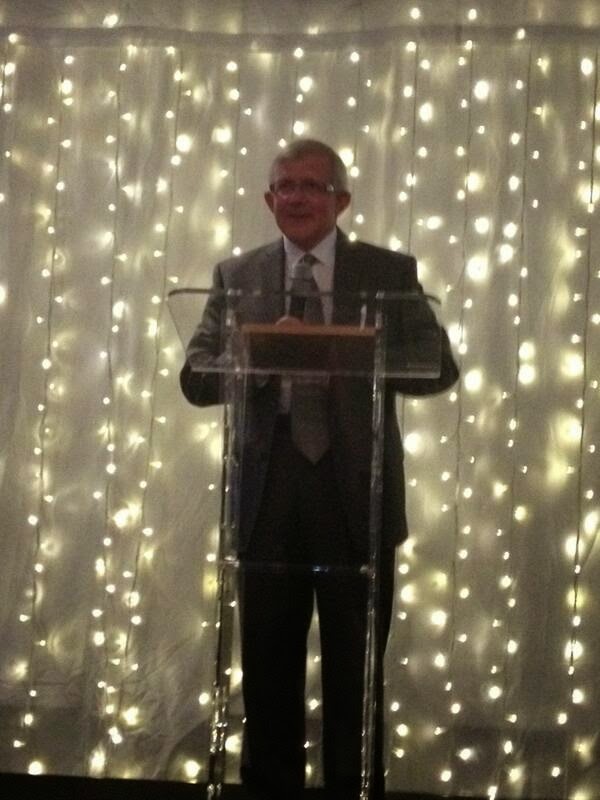
I'd like to express my heart-felt thanks to the New Zealand Association of Economists for making me a Distinguished Fellow.
The award took place last Thursday evening at the dinner for the 55th Conference of the Association, in Auckland. The award was most humbling, all the more so for coming from those who first supported me in my career.
Recipients of this award in recent years have included such ex-pats as Peter Phillips, Stephen Turnovsky, Leslie Young. John McMillan, and John Riley. All the more reason for me feeling humbled.
Thanks NZAE. I'm truly grateful for this honour.
Recipients of this award in recent years have included such ex-pats as Peter Phillips, Stephen Turnovsky, Leslie Young. John McMillan, and John Riley. All the more reason for me feeling humbled.
Thanks NZAE. I'm truly grateful for this honour.
Saturday, July 5, 2014
My July Reading List
Here we go again - no excuses - time to catch up on your reading:
© 2014, David E. Giles
- Baillie, R. T., G. Kapetanios, and F. Papailias, 2014. Modified information criteria and selection of long memory time series models. Computational Statistics and Data Analysis, 76, 116-131.
- Pitarakis, J-Y., 2014. A joint test for structural stability and a unit root in autoregressions. Computational Statistics and Data Analysis, 76, 577-587.
- Ghysels, E., J. B. Hill, and K. Motegi, 2013. Testing for Granger causality with mixed data frequency. DP9655, Centre for Economic Policy Research.
- Gresnigt, F., E. Kole, and P. H. Franses, 2014. Interpreting financial market crashes as earthquakes: A new early warning system for medium term crashes. Tinbergen Institute Discussion Paper TI 2014-067.
- Marsh, P., 2013. A review of non-parametric econometrics. Econometrics Journal, 16, B1-B3(3).
Friday, July 4, 2014
The Econometrics of Temporal Aggregation - I
Yesterday, I gave the A. W. H. Phillips Memorial Lecture at the 55th Conference of the New Zealand Association of Economists. The conference was held at Auckland University of Technology in New Zealand, and it was a great success.
More on the conference itself in a subsequent post.
Meantime, you can find the slides for (a slightly extended version of) my address here, and an extended bibliography for the talk here.
In some posts that will follow I'll elaborate on some of the main messages that should be drawn from what I had to say at the conference.
Meantime, you can find the slides for (a slightly extended version of) my address here, and an extended bibliography for the talk here.
In some posts that will follow I'll elaborate on some of the main messages that should be drawn from what I had to say at the conference.
Tuesday, July 1, 2014
The Econometrics Bard Strikes Again!
Guy Judge (now retired from the University of Portsmouth in the U.K.) has been back at it again in the past couple of days.
In recent years Guy has shared several original econometrics poems/songs with us through his Guy's Econometrics Blog.
The latest two contributions go under the titles of "Granger" and "Backing Bayes".
Enjoy them!
© 2014, David E. Giles
In recent years Guy has shared several original econometrics poems/songs with us through his Guy's Econometrics Blog.
The latest two contributions go under the titles of "Granger" and "Backing Bayes".
Enjoy them!
Wednesday, June 25, 2014
New Zealand Association of Economists Conference
In a couple of days' time I'll be heading off to New Zealand to participate in the 55th Annual Conference of the N.Z. Association of Economists. I'll be one of the keynote speakers, and I'm honoured to be presenting the A. W. H. Phillips Memorial Lecture.
That's "Bill" Phillips of The Phillips Curve fame - a very interesting and immensely talented New Zealander about whom I've posted previously, here and here.
My talk is titled, "The Econometrics of Temporal Aggregation: 1956-2014". The link to Bill Phillips is through his seminal work on continuous-time econometrics, and the lessons it has for econometric modelling when our data have been aggregated over time.
You can guess that I'll be posting on this topic in more detail in the near future. As soon as I've given my address, I'll make the slides available through this blog.
More on Celebrating Trygve Haavelmo
In a recent post I drew attention to the special issue of Econometric Theory that is being devoted to the contributions that Trygve Haavelmo made to econometrics, and to the founding of the Econometric Society. In fact, there will be two issues of the journal that will be dealing with this topic.
Most of the papers that will appear in the first issue (to be published next year) are now available on the ET website. One paper that isn't there yet is one that I mentioned in an earlier post. It's titled, "Trygve Haavelmo at the Cowles Commission", by Olav Bjerkholt. You can download this paper here.
Olav wrote to me recently, saying: "My own paper will appear in ET with some pictures and also an unusual illustration, a page from Haavelmo's notebook showing the list of persons who received his 1941 early version of Probability Approach." Olav is referring to Haavelmo's seminal paper, "The Probability Approach in Econometrics", which was published in Econometrica in 1944. That paper is available in its entirety, here.
Olav has kindly given me permission to reproduce Haavelmo's list, so here it is:
Monday, June 23, 2014
The First European Meeting of the Econometric Society
Olav Bjerkholt has alerted me to an interesting new paper of his that documents a milestone gathering of econometricians. Titled, The First European Econometric Society Meeting, September 1931, Lausanne, Olav's paper was presented at the 18th Annual ESHET Conference at the Université de Lausanne, last month.
You'll recall that I've mentioned Olav's work previously on this blog - here, here, and most recently, here.
Here's the abstract from Olav's paper:
"The idea of an econometric association was conceived in Europe in 1926, the organization meeting founding the Econometric Society (ES) took place in the U.S.A. in 1930, while the first ES meeting was convened in Lausanne at the end of September 1931. The venue was deliberately chosen to honour Walras and Pareto. The meeting was hastily prepared and had few participants. The Lausanne meeting established the tradition of Econometric Society European Meetings (ESEMs). The paper gives an account of the meeting with excerpts from the exchange between Council Members of ES in 1931. The participation, paper topics and the emphasis on paying homage to econometric pioneers at the Lausanne meeting is set out. The Econometric Society was the first international organization in economics. At the end of the first year ES had 163 members distributed over residents in 19 countries. The multi-language, multinational character of the original venture of bringing together scholars in Europe who shared an interest in the econometric program generated a series of ESEMs of considerable importance for the development of econometrics, until sombre political events overshadowed the meetings. The paper is part of a history project within the Econometric Society."If you have an interest in the history of our discipline - and I think you should (!), then you'll find this paper extremely valuable.
Subscribe to:
Posts (Atom)